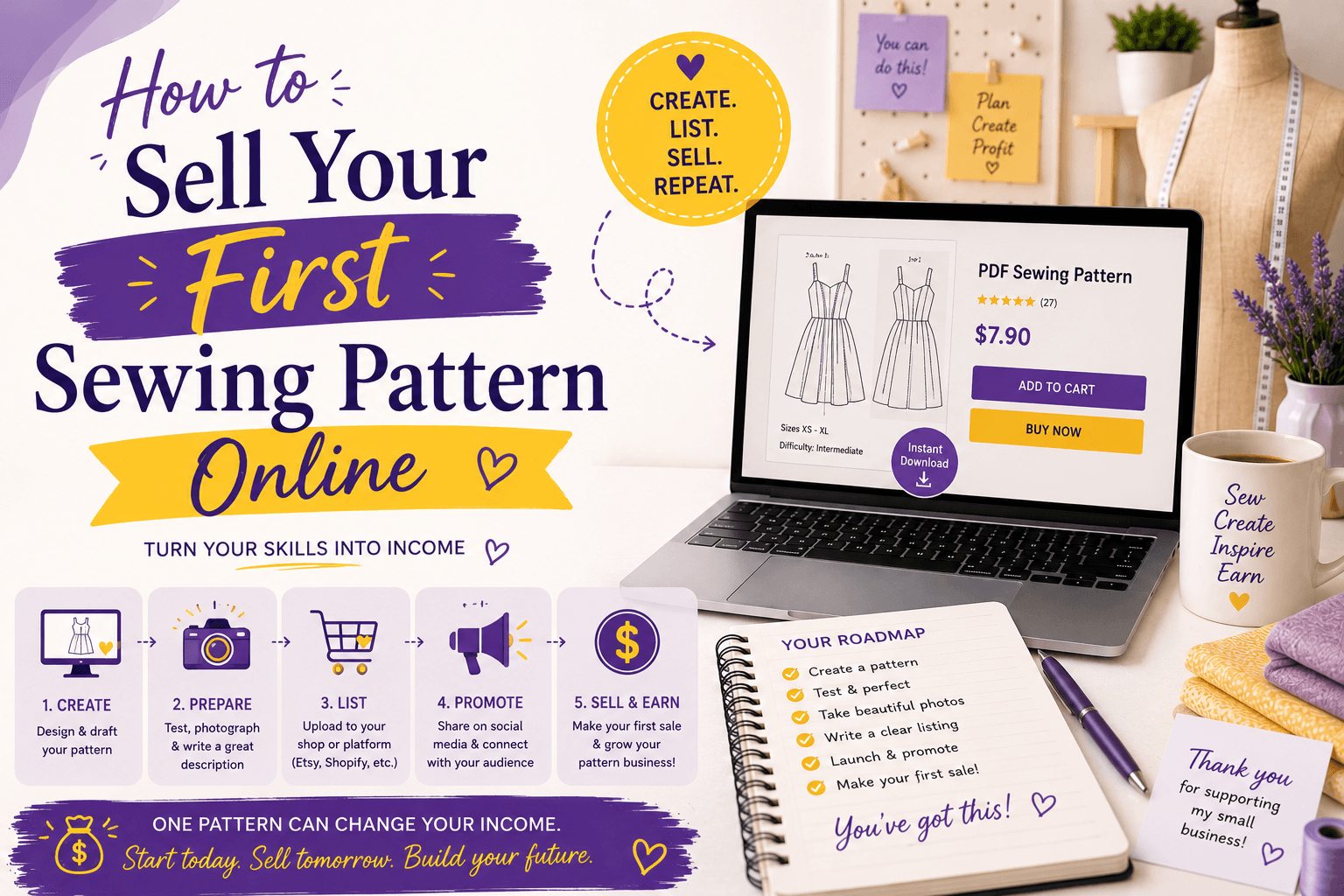
I still remember the first time I turned a stack of test pieces into something I could actually sell. I had no big audience, just a simple pattern, a little courage, and a few long nights at the machine. If you want a smart place to start, save this resource: MULTISIZE MEASUREMENT TABLE FOR YOUR CAD SOFTWARE.
MULTISIZED MEASUREMENT SET TABLE FOR YOUR CAD PATTERN DRAFTING
If you like seeing how a finished pattern package looks, take a quick peek at my digital patterns and notice how a clean layout makes shopping easier.
The good news is that your first sewing pattern does not need to be perfect. It just needs to be useful, clear, and easy to follow. If you are a home sewer or a fashion designer learning CAD dress pattern drafting the easy way, this is exactly the kind of project that can build your confidence fast.
OTHER RELEVANT BLOG POST


Think of this as a small but real business move. You are not only making a pattern, you are creating a product that can help someone sew something they love, over and over again. That is why I always tell beginners to start simple, stay organized, and focus on one helpful pattern before trying to build a big catalog.
In the steps below, I will walk you through choosing a pattern idea, drafting it, packaging it, pricing it, and publishing it online without the usual overwhelm.
1. Choose a pattern people actually want
Your first pattern should solve a real problem. The easiest choice is usually a simple garment with repeat demand, like a sleeveless top, an elastic waist skirt, lounge pants, or a beginner-friendly dress. If you are thinking like a customer, ask yourself: would someone search for this pattern because it is practical, flattering, and easy to sew?
One of the safest ways to start is to pick a style you already know how to fit well. If you can make it fast in your own process, you will spend less time fixing mistakes later. You can also browse what is already popular in your niche on marketplaces like Etsy Seller Handbook for listing ideas and demand clues.
2. Draft and test the pattern before you sell it
This step matters more than people think. A pattern can look beautiful on your screen and still fail in real life if the fit is off. Test your draft on a sample fabric first, then sew a wearable toile if needed. Mark every change, update the pieces, and keep your measurements organized as you go.
If you are working digitally, CAD dress pattern drafting becomes easier when your size points and measurements are clean. That is why a solid measurement table saves so much time. It helps you move from sketch to pattern without guessing. If you want to compare drafting styles, the free vector editor Inkscape and Adobe Illustrator are both worth exploring for different workflows.
OTHER RELEVANT BLOG POST
3. Turn your sewing pattern into a digital file
Once the pattern is tested, digitize it neatly. This is where your work becomes a product buyers can download, print, and sew. Make sure every piece is labeled, grain lines are clear, notches are visible, and the scale box is accurate. If the file feels easy for you to read, it will feel easier for your customer to use too.
When you are preparing to sell your first sewing pattern online, your file package should feel professional even if it is simple. Clean edges, consistent naming, and a tidy layout do a lot of the selling for you.
4. Package the files buyers expect
Most customers want more than just the pattern pieces. Give them a complete, helpful package. A good first bundle usually includes:
- A tiled PDF for home printing
- A large-format copy shop file if possible
- A clear size chart
- Cutting layouts
- Step-by-step instructions
- Optional screenshots or photos of the sewing process
If you want to make the buying experience smoother, keep file names short and easy to understand. Something like Pattern_Name_PDF is much better than a random file code. Buyers should know exactly what they are downloading.
5. Price your first pattern simply
Do not overcomplicate pricing. For a first pattern, it helps to think about your time, the value of the design, and what similar patterns cost in your niche. You are not trying to be the cheapest person online. You are trying to be fair, clear, and confident.
A simple pricing range can work very well when you are just starting out. If the pattern is beginner-friendly and solves a clear need, people will often pay for convenience and quality. You can always adjust later after you see how customers respond.
6. Choose the easiest place to sell
You do not need five sales channels on day one. Pick one place where you can focus and learn. That might be your own shop, a marketplace, or a simple course-and-shop ecosystem if you also teach drafting. The goal is to reduce stress and get your first sale.
If you want to keep growing beyond one pattern, take a look at my courses and my digital patterns for examples of how to structure your products for buyers.
7. Write a listing that helps people say yes
Your product page should answer the questions buyers are already asking in their heads: What can I make? What sizes are included? Is this beginner-friendly? What tools do I need? How do I print it? The clearer your answers, the fewer doubts people will have.
Use simple words, short paragraphs, and a few strong photos or mockups. Show the finished garment, a close-up of details, and a flat lay if you have one. If you need help thinking like a seller, the Etsy Seller Handbook is a helpful external resource for product listings and customer trust.
8. Launch with a small, honest promotion plan
You do not need a huge launch. Share your pattern with your sewing circle, post progress clips on social media, email a few friends, and show behind-the-scenes content. People love seeing the making process because it feels real. That is especially true for home sewers who like knowing the story behind the pattern.
One of the easiest ways to build momentum is to post your process: sketch, draft, test, refine, and final result. It turns your pattern into a journey, not just a file. If you enjoy teaching, share a quick tip about fit or digitizing so people can see your skill.
Tools that make the process easier
If you are still figuring out your setup, here are a few tools that can make your life easier:
- CAD software: for digitizing and clean pattern pieces
- Vector editor: for labels, layouts, and exporting PDFs
- Printer and scanner: for testing and checking scale
- Measuring tools: for accurate fit and grading
- Mockup templates: for better product images
Keep your workflow simple at first. The easier your process is to repeat, the faster you can create your next pattern. If you are building a small pattern business, repeatable systems will save your energy.
Quick mistakes to avoid
Here are a few things that can slow down beginners:
- Skipping the test sew
- Using unclear size labels
- Uploading messy PDF pages
- Writing a product description with no details
- Trying to sell too many patterns at once
When in doubt, make it easier for the customer. A helpful pattern with good instructions will always feel more valuable than a fancy file that is hard to use.
Frequently asked questions
Can I sell my first sewing pattern online if I am still learning?
Yes. Start with one simple pattern, test it well, and make the instructions easy to follow. Learning while you build is normal.
What is the best pattern to sell first?
A beginner-friendly style with repeat demand, like a sleeveless top, skirt, or basic dress, is often a smart choice.
Do I need expensive CAD software?
No. You can begin with affordable or free tools and upgrade later when your workflow grows.
How do I know if my pattern is ready?
If it is tested, clearly labeled, and easy for someone else to sew from your instructions, you are in a good place to launch.
You really can sell your first sewing pattern online without waiting for everything to be perfect. Start small, keep your files clean, speak clearly to your buyer, and let one good pattern be your first step. Once you have that first product out in the world, the next one becomes much easier.