When I first tried to turn pattern drafting into a business, I was sitting at my kitchen table with paper scraps, a ruler, and a CAD screen that looked far more complicated than it needed to be. I kept thinking, “There has to be an easier way to help home sewers and new designers make clean, accurate patterns without the stress.” If you want a simple place to start, MULTISIZE MEASUREMENT TABLE FOR YOUR CAD SOFTWARE can save you a lot of guessing right from the beginning.
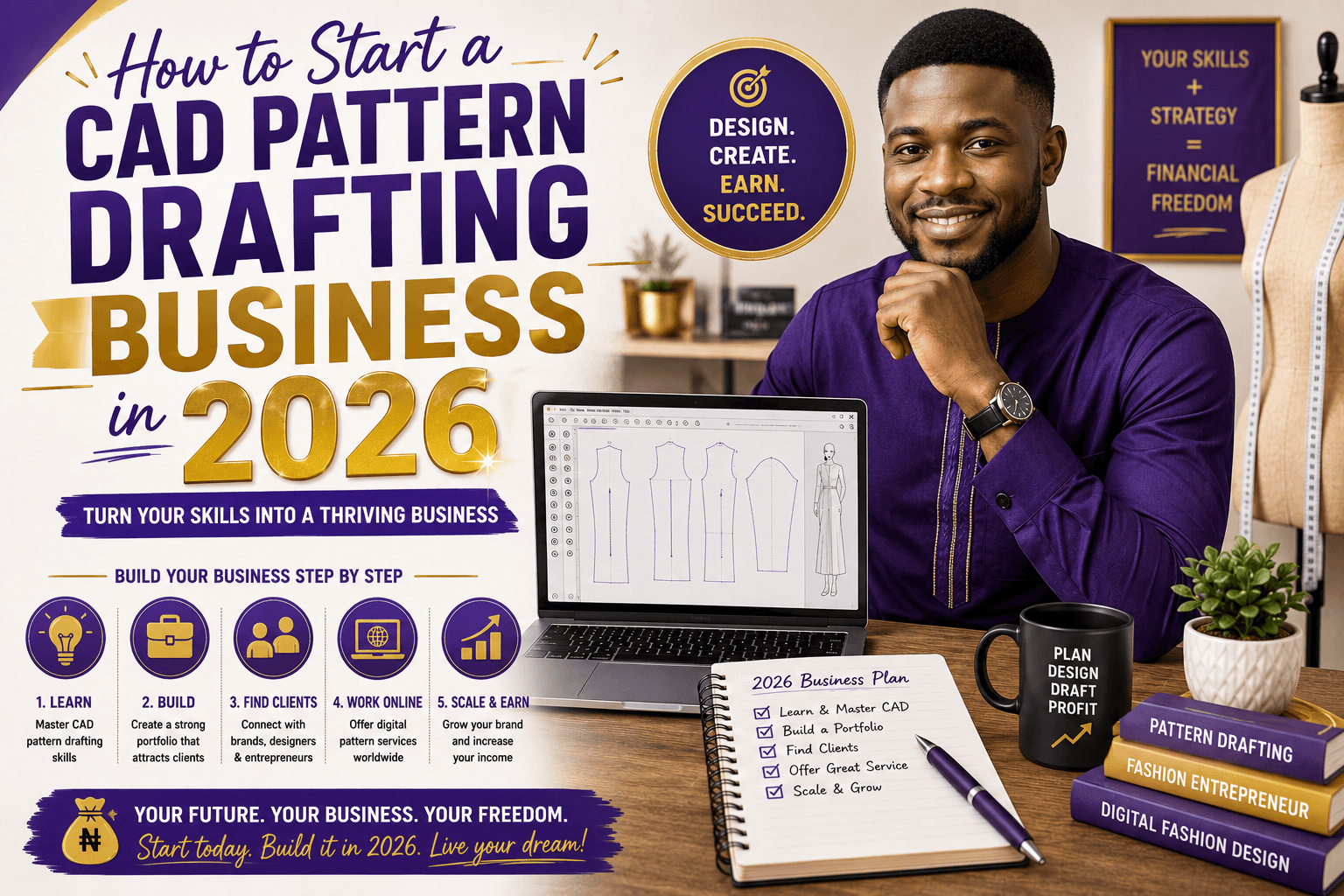
That is really the heart of a pattern drafting business in 2026: helping people get from idea to fitting pattern faster. Home sewers want patterns that are easier to understand. Fashion designers want cleaner workflows. And if you can offer both creativity and accuracy, you already have something valuable.
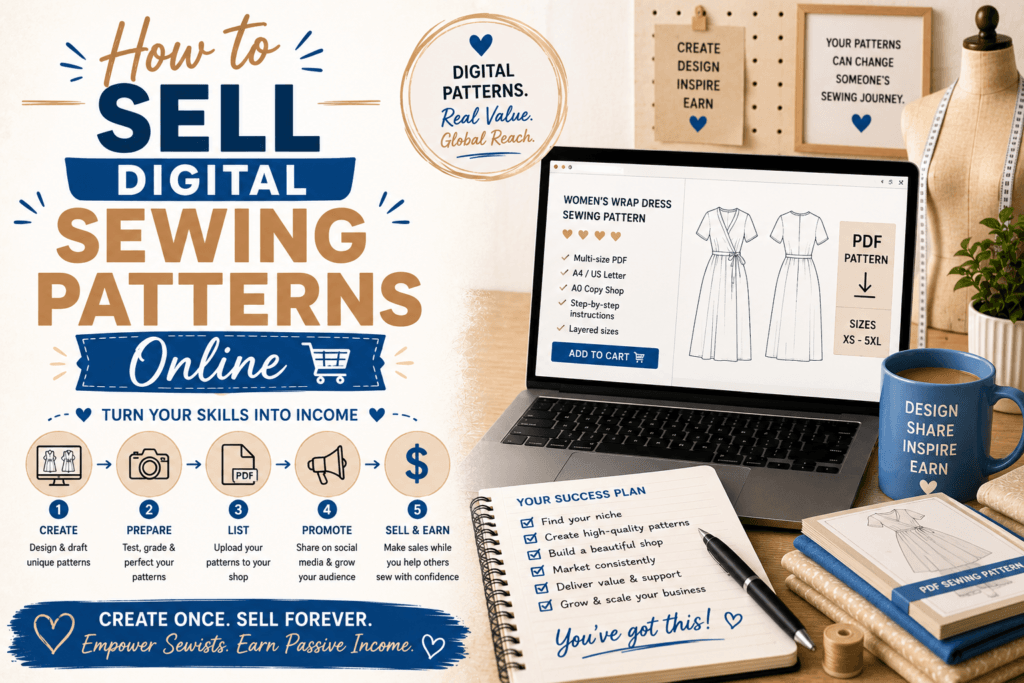
If you want to see the kind of finished work you could create and sell, take a look at my digital patterns. They are a great example of how simple, useful pattern products can solve a real problem for sewists.
If I were starting from scratch, I would begin with one clear niche, one simple offer, and one easy CAD workflow. I would not try to sell everything at once. I would choose a style category I understand well, such as sleeveless dresses, basics, or beginner-friendly sewing patterns, and I would make that my starting point.
OTHER RELEVANT BLOG POST


Then I would build my process around speed and clarity. That means measuring carefully, drafting in CAD, testing fit, and writing simple instructions that a real person can follow without feeling lost. The easier your process is for the customer, the easier it becomes to grow.
Start with a simple offer
The best way to launch a pattern drafting business is to make your offer easy to understand. You can sell digital sewing patterns, custom pattern drafting, grading services, or teaching materials for people learning CAD dress pattern drafting the easy way. Keep the promise clear: save time, improve fit, and make sewing less confusing.
When people shop for sewing resources, they usually want one of three things: a faster way to sew, a better fit, or a pattern that removes confusion. If you frame your offer around one of those needs, your message will be much stronger. Instead of saying, “I make patterns,” say, “I create beginner-friendly patterns that fit well and are easy to sew.” That kind of language helps buyers quickly understand why they should trust you.
You do not need twenty products to begin.
One strong pattern, one clear service, or one useful class can give you the proof you need to build momentum. A focused offer is easier to market, easier to improve, and easier to price well.
OTHER BLOG POST THAT MIGHT INTEREST YOU
Choose a niche you can serve well
A niche does not limit your growth. It helps people remember you. In 2026, the pattern drafting businesses that stand out will likely be the ones that solve one problem really well for a specific audience. You might focus on women’s basics, children’s garments, modest fashion, plus-size blocks, sleeve variations, or beginner CAD support. The key is to choose an audience you understand.
If you know what frustrates your customers, you can build patterns that feel like a relief instead of a challenge. That is especially true for home sewers who are tired of vague instructions or poor fit. The more clearly you speak to their pain points, the easier it becomes to build trust.
For example, if your audience struggles with sleeves, you can make sleeve-focused products. If they need simple wardrobe staples, create clean basics. If they are learning digital drafting, sell templates, blocks, or short lessons that help them move faster. A niche is not about being small forever. It is about being useful now.
Set up a CAD workflow you can repeat in your pattern drafting business
A repeatable workflow is one of your biggest business assets. I would start with accurate measurements, a master block, and a multisize grading system. If you are using CAD, learn the basics of layers, points, curves, and export settings first. For technical help, the Seamly2D tutorials and the Adobe Illustrator user guide are useful places to learn more.
Your workflow should be simple enough to repeat without stress. Measure, draft, test, revise, label, export, and store your files in a way that makes sense. If you can repeat the same steps every time, you will make fewer mistakes and finish products faster. This matters whether you are selling one pattern or managing a whole catalog.
I would also create a naming system for files, sizes, and versions. That may sound boring, but it saves hours later. When customers ask questions or you need to update a pattern, organized files make your business look more professional and help you move quickly.
Tools I would use in 2026 for my pattern-drafting business
You do not need every tool on day one. I would keep it simple with a good measuring tape, ruler set, French curve, notebook, scanner or tablet, and one CAD program you can learn deeply. If you are teaching yourself, focus on consistency before fancy features. Accuracy and clean files will always matter more than complicated shortcuts.
I would also keep a digital folder for blocks, slopers, grading notes, customer feedback, and test results. A simple spreadsheet can help track size charts, pricing, revision dates, and product performance. The more you treat your drafting business like a real system, the easier it becomes to grow it into one.
If you plan to sell downloadable products, it helps to think like a customer. Make sure your pattern files are easy to open, clear to print, and simple to assemble. Add markings, grainlines, seam allowances if needed, and instructions that do not assume too much prior knowledge.
How I would price pattern-drafting services
Start by pricing for your time, skill, and the value you give. Beginner-friendly pattern drafting services can be priced as single blocks, size ranges, or custom requests. Digital products can be sold repeatedly, so they are great for building passive income over time. Courses, templates, and pattern bundles can also help you raise your average sale.
One of the biggest pricing mistakes is charging only for the time it takes to draft. You are also charging for experience, fit knowledge, problem-solving, and file preparation. Customers are not paying just for lines on a screen. They are paying for confidence, convenience, and a better result.
You can make pricing easier by building tiers. For example, you might have a basic pattern, a premium pattern with detailed instructions, and a custom drafting service for clients who need special adjustments. Tiered pricing gives people choices and helps you earn more from the same skill set.
How to get your first customers
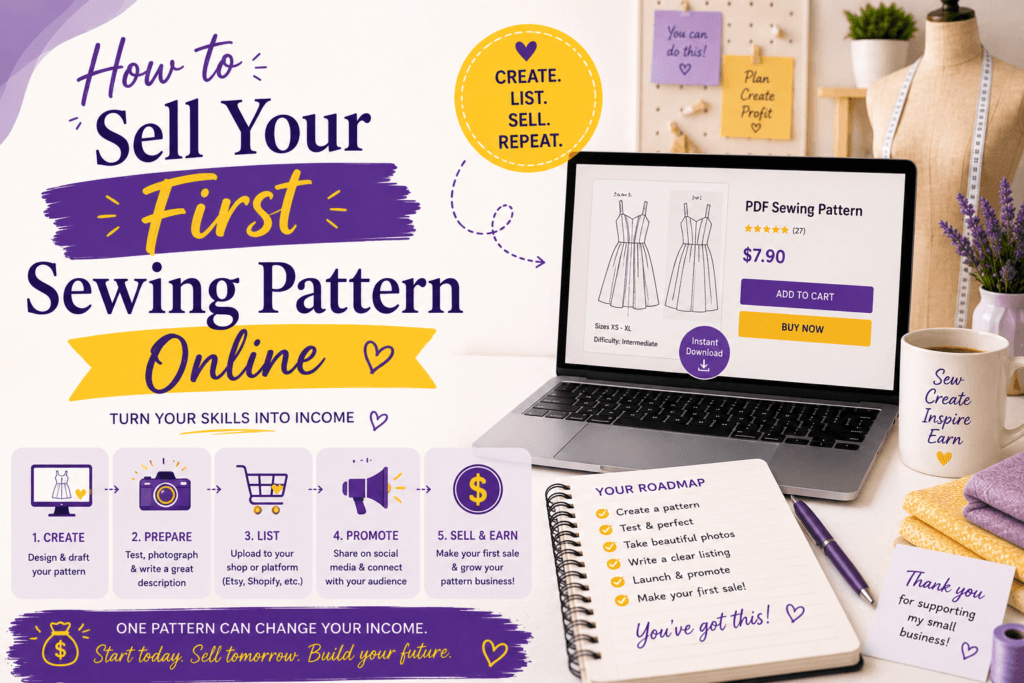
I would use a simple mix of content and community. Show your drafting process on social media, share fitting tips, and answer questions from home sewers. Add clear product descriptions, helpful photos, and easy checkout links. You can also direct people to your own learning resources, such as my courses, so they can keep learning with you.
Your first customers are often people who already know you, trust your taste, or appreciate your teaching style. That is why content matters. When you show how a pattern is made, how fit is tested, or how a block turns into a finished design, people begin to see your value. They are not just buying a file; they are buying your process.
Short videos, before-and-after examples, sketch-to-pattern posts, and sewing tips can all help. If you prefer email marketing, offer a freebie such as a measurement table, a fitting checklist, or a small guide. Then follow up with useful emails that show your products and explain how they help.
Build trust with clean presentation
In pattern drafting, presentation matters more than many beginners realize. A pattern can be technically good and still fail if the instructions are confusing or the visuals look messy. Clear labeling, neat PDFs, strong photos, and simple formatting make your work feel more professional immediately.
Trust also grows when your marketing matches the actual product. If you say a pattern is beginner-friendly, make sure it really is. If you say a pattern is for multisize grading, show the size range clearly. Accuracy in your messaging is part of your brand.
Think of your product page as part of the pattern. The page should answer questions before they become objections. What skill level is needed? What file format is included? Is seam allowance included? What sizes are covered? The fewer uncertainties a buyer has, the more likely they are to purchase.
Common mistakes to avoid
Do not try to make your business too big too soon. Do not skip fit testing. Do not bury the value of your work under vague language. And do not wait until everything is perfect before you launch. A small, clear, helpful offer will usually grow faster than a complicated one that nobody understands.
Another common mistake is creating too many unfinished ideas. It is easy to get excited and start five patterns at once, but that usually slows you down. Finish one product, improve it, and learn from it before adding the next one. A small catalog of excellent patterns is better than a large catalog of inconsistent ones.
You should also avoid underestimating the value of customer feedback. Even one helpful comment can point out where your instructions are unclear or where your sizing needs adjustment. If you listen well, your customers will help you make a better product.
How to scale without losing quality
Once your first products are working, scale slowly and intentionally. Add related products, not random ones. If your customers love sleeveless patterns, expand into dresses, bodices, or complementary blocks. If they like your teaching style, create a short course or template pack that supports the same audience.
Scaling should make your business stronger, not more chaotic. Reuse your best ideas, streamline your most common steps, and build templates for product pages, size charts, and instruction sheets. Automation can help, but only after your system is already clear.
You can also raise your prices over time as your reputation grows. Better fit, better support, and better presentation all justify stronger pricing. That is especially true if you become known for making complex things feel simple.
FAQ
Q: Do I need to be an expert to start?
A: No. You need to be teachable, organized, and willing to practice. Many successful businesses start with one skill and grow from there.
Q: Can home sewers buy CAD patterns too?
A: Yes. In fact, home sewers are often the best customers because they want patterns that are simple, accurate, and easy to sew.
Q: What should I sell first?
A: Start with one product type, like a basic dress block, a small pattern bundle, or a beginner-friendly digital pattern.
Q: How do I stand out?
A: Make things easier. Clear instructions, better fit, and thoughtful sizing can make your work feel premium right away.
Q: Do I need expensive software?
A: Not at first. Start with one reliable CAD tool and learn it well. Your workflow matters more than having every feature available.
My honest advice for 2026
If I were starting today, I would not wait for perfect software, perfect branding, or perfect confidence. I would pick one problem, solve it well, and keep showing up. That is how a pattern drafting business grows: one useful pattern, one happy customer, one clear system at a time.
The fastest path is usually the simplest one. Learn the basics, build a repeatable CAD workflow, sell one clear product, and listen closely to your customers. If you do that, you can turn a small sewing skill into a real business.
What matters most is momentum. A pattern drafting business does not become successful because it looks impressive on day one. It grows because you keep improving the draft, refining the instructions, and making the customer experience easier. That kind of steady progress compounds quickly.
So start small, stay organized, and keep your focus on usefulness. If your work helps a person sew with more confidence, you are already building something people will value.
Focal key phrase: pattern drafting business in 2026