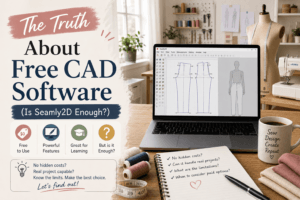
The first time I opened Seamly2D, I was just trying to save one pattern from getting messy. But after a few tries, I realized something exciting: when you learn digital products you can sell using Seamly2D, you are not only making patterns for yourself, you are building something that can earn for you too. If you want a simple place to begin, download MULTISIZE MEASUREMENT TABLE FOR YOUR CAD SOFTWARE.
Seamly2D is one of those tools that quietly makes life easier for home sewers, new CAD pattern drafters, and fashion designers. You can draft, edit, grade, and export pattern pieces in a clean, repeatable way, which means less guesswork and more polish in your final products.
If you want to see how finished files can be packaged for customers, take a look at my digital patterns. They are a helpful example of how a simple draft can become a clear, sellable product.
What I love most is that one Seamly2D file can turn into several different income streams. A draft can become a PDF sewing pattern, a custom block, a grading pack, a fitting guide, or even a mini training kit for other makers.
Before you start, think small and specific. Pick one customer, one problem, and one clear file type to sell. If you want help turning your drafting practice into a real business, this is a great next step.
Why Seamly2D Works So Well for Selling Digital Products
Seamly2D is free, flexible, and built for pattern work, so it is a smart choice if you want to learn CAD dress pattern drafting the easy way. It gives you a digital space to draft clean shapes, make changes fast, and export files that can be shared with customers online.
For a smooth workflow, I like to keep a few tools nearby:
- Seamly2D for drafting and grading
- Inkscape for simple vector cleanup, labels, or cover pages
- A PDF viewer for checking page layout before you sell
- A measuring tape, notebook, and your best body measurement chart
The best part is that you do not need to make everything complicated. Clear measurements, neat labels, and a simple export process can already give you a professional result.
1. PDF Sewing Patterns
This is usually the easiest product to start with. If you already draft garments for yourself or for clients, you can turn those patterns into downloadable PDF sewing patterns that other home sewers can print at home and use right away.
- Draft the pattern in Seamly2D
- Test the fit on a muslin or sample garment
- Add seam allowances, grainlines, and labels
- Export the file as a neat PDF
- Include instructions, size info, and fabric suggestions
Tip: Keep the first design simple, like a sleeveless top, basic skirt, or easy dress. Simple products are easier to explain, easier to sew, and easier to sell.
2. Custom Bodice, Skirt, and Sleeve Blocks
Pattern blocks, also called slopers, are another great digital product. These are clean base patterns without style details, and many fashion students, small brands, and advanced home sewers love them because they can build new designs from a solid foundation.
You can sell them as single blocks or as a bundle. For example, you might offer a bodice block, a skirt block, and a sleeve block together, so your buyer can start drafting from the basics without needing to build everything from scratch.
Tip: Include measurements, suggested ease, and a short note about the fitting method you used. That builds trust and helps the buyer use the block correctly.
3. Grading Bundles and Size Charts
If you enjoy working with measurements, grading bundles can be very valuable. A grading bundle helps a pattern grow through multiple sizes, which is something many brands need when they want to offer inclusive sizing.
You can create:
- A size chart based on body measurements
- Grade rules for a specific garment type
- Ready-to-use graded pattern files
- A guide that explains how to move between sizes
Tip: Keep your size range clear and well labeled. Buyers appreciate neat sizing information because it saves them time and confusion.
4. Fit Adjustment Worksheets and Alteration Guides
Not every digital product has to be a full garment pattern. Sometimes the most helpful thing you can sell is a guide that teaches people how to fix fit issues. Think bust adjustments, waist shaping, sleeve corrections, neckline tweaks, and other common changes.
You can package your knowledge into a worksheet, a fitting checklist, or a short alteration guide with images. This works especially well for beginners who want help without sitting through a long class.
Tip: Use simple language and clear diagrams. The easier your guide is to follow, the more useful it becomes.
5. Mini Courses and Pattern-Making Kits
If you enjoy teaching, this one is a nice fit. You can use Seamly2D files as part of a small digital kit that includes a practice pattern, a measurement table, a worksheet, and a short lesson. This kind of product is perfect for learners who want structure.
For example, a mini kit could include:
- A base pattern file from Seamly2D
- A printable worksheet
- A quick video or PDF lesson
- A list of tools and measurement tips
Tip: A small, focused lesson often sells better than a huge course because it feels manageable and gives fast wins.
How to Turn One Draft into a Product People Will Buy
- Choose one audience. Is your product for home sewers, fashion students, or small labels?
- Solve one problem. Maybe it is fit, speed, sizing, or learning CAD drafting.
- Draft and test in Seamly2D. Make sure the file is clean before you share it.
- Package it well. Add a cover, instructions, measurement notes, and export files in the right format.
- Keep the product easy to understand. Clear naming and simple directions help buyers feel confident.
If you want to move faster, start with one product and improve it as you learn from buyers. You do not need a huge catalog on day one. You just need one good file that helps the right person.
Smart Selling Tips for Seamly2D Creators
- Use consistent naming for your pattern pieces and layers.
- Check page size before exporting PDFs.
- Test your download links and file folders.
- Write short, friendly instructions that a beginner can follow.
- Take clear product photos or mockups so buyers can see the value quickly.
And if you are building your own brand, think about how your files look together. Clean packaging, helpful instructions, and a consistent style can make a small shop feel very professional.
FAQ
Can I sell patterns made in Seamly2D?
Yes, you can create original patterns, blocks, grading files, and teaching materials in Seamly2D and sell them as digital products. Just make sure the design is yours and that your files are tested and clearly labeled.
What is the best digital product to sell first?
A simple PDF sewing pattern is often the easiest first product because it is practical, useful, and familiar to buyers. If you prefer teaching, a fitting guide or small pattern-making kit is also a good starting point.
Do I need advanced CAD skills to start?
No. You can begin with a basic block, a simple garment, and a small set of measurements. As you get comfortable, you can add grading, variation, and more advanced exports.
What files should I include when selling a Seamly2D product?
It helps to include a PDF, any needed instruction sheets, a measurement chart, and if relevant, the original project file or a bonus worksheet. The goal is to make the buyer feel supported.
Final Thought
If you have been sitting on your drafting skills, this is your sign to use them. Start with one simple idea, make it clean, test it well, and put it out there. The more you practice, the easier it becomes to create digital products that help other people and bring in income for you too.