Two pieces of fabric can look almost identical on a shelf and behave completely differently once you start sewing. One may stretch comfortably around the body and then spring back. The other may hold a crisp line, resist stretching, and need a little extra room to move. If you have ever used a pattern that looked right but felt strange in the finished garment, the fabric may have been part of the story.
Understanding knit vs woven patterns helps you make better choices before you draft, cut, or sew. It does not mean one fabric type is better than the other. Knits and wovens simply need different things from a pattern because their structure, stretch, recovery, and drape are not the same.
The good news is that you do not have to memorise every textile word before you begin. You only need to notice how the fabric moves, how it returns to shape, and how much wearing ease the garment needs. Once you learn to check those three things, your pattern decisions become much clearer.
OTHER RELEVANT BLOG POST
Knit vs woven patterns: why fabric changes the fit
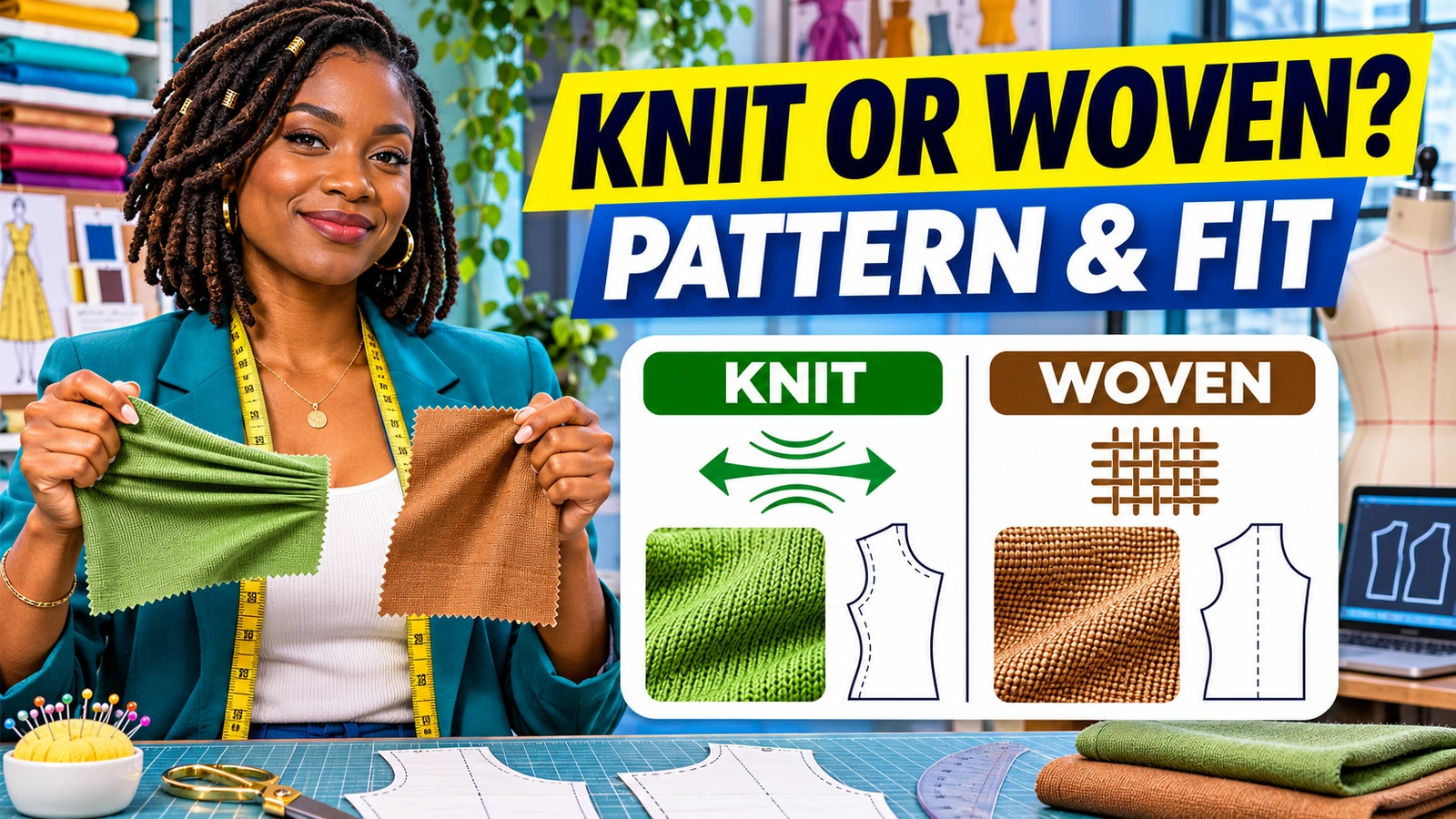
A woven fabric is made from yarns that cross over and under each other. Unless it has an added stretch fibre or is cut on the bias, it does not usually stretch much across the grain. A knit fabric is made from loops. Those loops allow the fabric to stretch, often in more than one direction. That difference changes how close the garment can sit to the body and how easily you can move in it.
Think about a fitted T-shirt and a fitted button-front shirt. The T-shirt can often sit closer because the knit gives when you move. A woven shirt usually needs enough extra room for your shoulders, arms, and torso to move comfortably. That extra room is called wearing ease. The pattern is not “wrong” when it includes ease; it is making space for the fabric to do its job.
Three fabric behaviours to check first
Stretch
Stretch is how far the fabric can extend when you pull it gently. Knits often stretch across the width, and some also stretch along the length. A woven may have very little stretch except on the bias. Do not assume every knit stretches the same amount. A stable ponte knit and a soft jersey can need very different pattern choices.
Recovery
Recovery is how well fabric returns to its original shape after stretching. A knit that stretches easily but does not recover well may become loose at a neckline, hem, or knee over time. When you are planning a close-fitting garment, recovery matters just as much as the amount of stretch.
Drape and structure
Drape is the way a fabric falls. Structure is the way it holds a shape. A soft knit may skim the body and show a curved seam differently from a crisp woven. A structured woven can support pleats, collars, and tailored details, while a drapey woven may need a looser silhouette. Before you adjust the pattern, hold the fabric up, fold it, and notice what it wants to do.
How ease changes between knits and wovens
Wearing ease is the extra room built into a garment so you can breathe, sit, reach, and move. In a woven garment, ease is usually more important because the cloth does not give much on its own. In a knit garment, a pattern may use less ease or even negative ease, meaning the finished garment is slightly smaller than the body measurement so it can stretch gently into place.
Negative ease is not a rule to use automatically. It depends on stretch percentage, recovery, garment style, and the comfort you want. A soft lounge top can have a different fit from a fitted activewear top even when both are knit. This is why changing a woven pattern into a knit pattern—or the other way around—needs more thought than simply using a different fabric.
A simple fabric test before you draft
- Cut a small swatch. Keep it large enough to hold without pulling the edges out of shape.
- Mark a short distance across the direction you expect to stretch. Use pins or a ruler rather than guessing.
- Pull gently and evenly. Do not tug hard enough to damage the fabric. Notice how far it extends.
- Release it. Watch whether it returns close to its original measurement or stays visibly stretched.
- Handle the swatch. Fold it, let it hang, and compare it with the design you want to make.
This is not a laboratory test, but it gives you a useful starting point. Write down what you notice beside your CAD file: stable knit, very stretchy knit, crisp woven, drapey woven, or woven with some mechanical give. Those notes help you make a more sensible first pattern instead of relying on memory later.
When you can adapt a pattern—and when to pause
You can often adapt a simple, relaxed pattern from one fabric family to another if you make a sample and expect to adjust the fit. However, pause before converting a fitted woven bodice into a close-fitting knit top, or a very stretchy knit pattern into a non-stretch woven garment. Areas such as necklines, armholes, closures, and sleeves can behave very differently.
Use your first sample as information, not as a final test of your ability. If a knit version feels loose, check the recovery and ease before shrinking every seam. If a woven version feels restrictive, check the style’s intended ease, not just the body measurement. Choosing the right sewing pattern for your body and project is often the first step toward a better fit.
A 10-minute fabric reality check before you draft
When you are unsure whether a fabric behaves more like a knit or a woven, do not rely on the shop label alone. A small hands-on test can prevent a pattern choice that looks fine on the screen but feels wrong when worn. Lay the fabric flat, gently stretch it across and down, then release it. Notice whether it springs back, drapes softly, or holds a firm shape.
- Stretch: mark a 10 cm section and see how far it comfortably extends without pulling hard.
- Recovery: let it rest and check whether it returns close to its original measurement.
- Drape: hang a corner over your hand and watch whether it folds, collapses, or stands away from the body.
- Opacity and weight: hold it to light and feel how it responds to a simple pinch.
Write those observations beside your pattern notes. This turns “knit versus woven” from a confusing label into useful design information. It also makes it easier to decide whether you need ease, negative ease, stabilising tape, a facing, or a different size before you make a full sample.
One practical rule: choose the fabric before you finalise the fit, not after. If you are using a favourite pattern for the first time in a new fabric, make a small test garment or at least test the key areas: neckline, armhole, waist, and hip. A short test now gives you better information than trying to rescue the whole garment later. Your notes will become a useful personal fabric library for the next project too.
Common mistakes to avoid
- Using a knit for a woven pattern without checking the stretch and recovery.
- Assuming all knits work with the same amount of negative ease.
- Adding extra width to a woven pattern without considering where the garment needs room to move.
- Ignoring the direction of stretch when laying out a knit garment.
- Skipping a sample when the fabric choice changes the design’s fit or structure.
FAQ
Can I use a woven pattern for knit fabric?
You can sometimes sew it as a test garment, but the finished result may be looser or behave differently. Check the pattern’s intended ease and test a sample before changing all of the pattern pieces.
Can I use a knit pattern for woven fabric?
Not without careful adjustment. A knit pattern may rely on stretch to get over the body and to allow movement. A woven version may need added ease, a closure, or a different construction method.
What is the easiest fabric for a beginner?
Choose a fabric that suits the project and feels manageable to you. A stable woven or stable knit is often easier to control than a very slippery woven or a very stretchy knit.
Does fabric weight matter as much as stretch?
Yes. Weight and drape affect how the finished garment hangs, while stretch and recovery affect movement and fit. Consider all of them together.
Choose the fabric before you finalise the fit
When you understand knit vs woven patterns, you stop treating fabric as an afterthought. Check the stretch, recovery, and drape first. Then draft or adjust with the fabric’s behaviour in mind. A small swatch test and a simple sample can save you from a lot of confusing changes later.