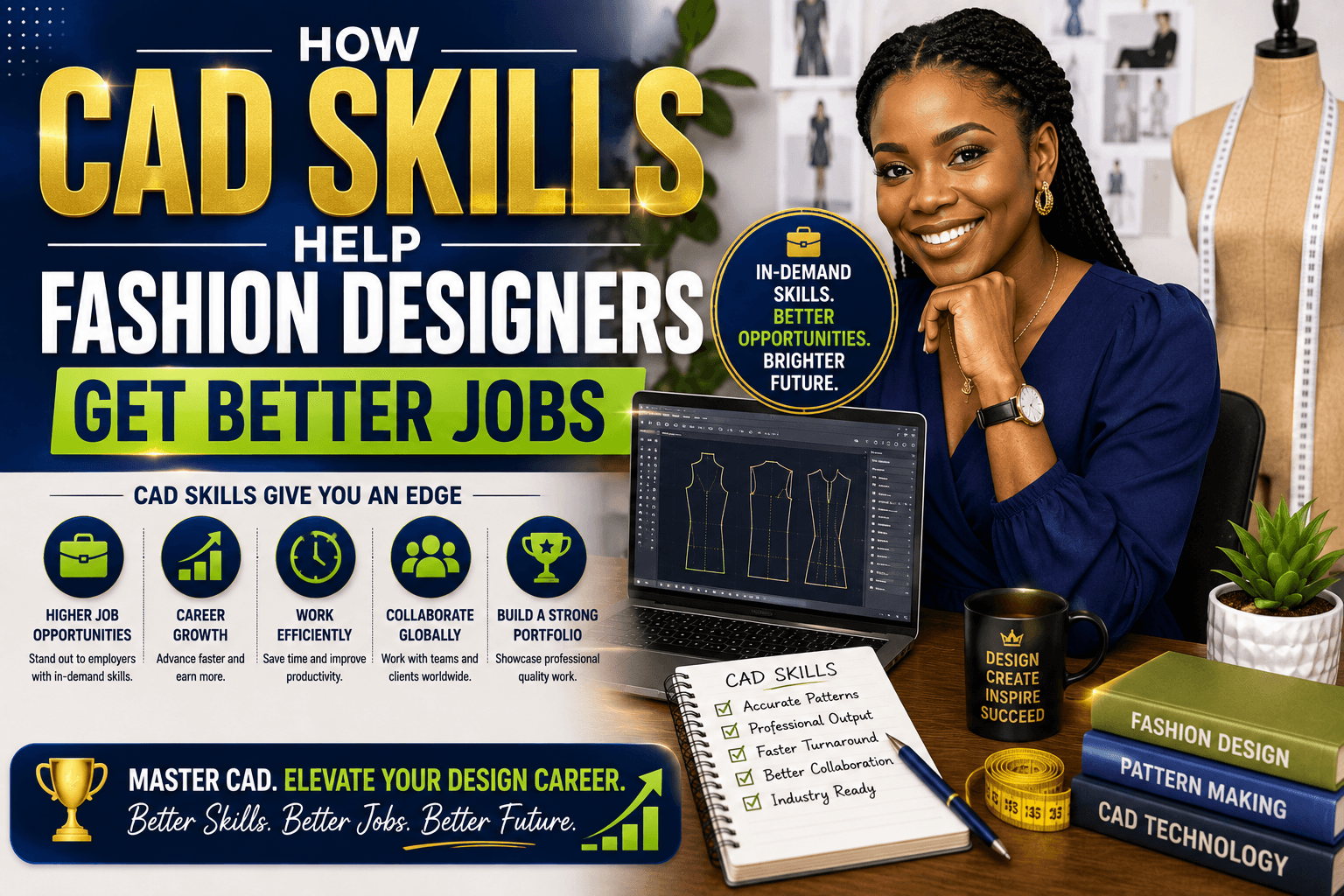
CAD skills actually help fashion designers find better jobs.
I still remember the first time I tried to turn a handmade dress idea into a real pattern for a small sewing job.
My paper pieces worked, but when the client wanted a size change, I spent hours redrawing seams, smoothing curves, and fixing tiny errors by hand. That was the moment I understood why so many people talk about a fashion CAD career with so much interest:
CAD can make your work cleaner, faster, and much easier to present professionally.
OTHER RELEVANT BLOG POST

If you sew at home, you may be thinking, “That sounds nice, but do I really need CAD?”
The honest answer is that you do not need it to enjoy sewing, but learning CAD fashion skills can open a lot of doors. It can help you draft patterns more accurately, adjust fit with less stress, and show employers that you can work in a modern production environment.
And if you are a beginner, please do not let the word “CAD” scare you.
It simply means computer-aided design, which is a fancy way of saying you use software to draw and edit patterns on a computer instead of only on paper. In pattern drafting, that means you can create, copy, resize, and refine pattern pieces in a more organized way.
That matters because fashion jobs are changing. Studios, small brands, and production teams want people who can move between creativity and technical work.
A designer who understands fabric and style is valuable, but a designer who also knows how to draft in CAD can save time, reduce errors, and communicate ideas more clearly.
I like to think of CAD as a bridge.
On one side is the creative idea, like a dress sketch, a blouse concept, or a jacket silhouette.
On the other side is the practical pattern that can actually be cut, sewn, and fit on a real body. When you can build that bridge well, your fashion design jobs options usually become stronger.
Why CAD fashion skills matter so much in today’s job market
When employers look at a portfolio, they are not only asking, “Can this person design something beautiful?” They are also asking,
“Can this person work accurately, quickly, and professionally?” That is where CAD fashion skills can really help.
Here are a few reasons CAD skills can improve your chances of landing better jobs:
- Faster pattern changes – You can adjust sizes, lengths, and details without starting over.
- Cleaner presentation – Digital pattern pieces look neat and professional.
- Better accuracy – You can measure, compare, and correct small errors more easily.
- Easy sharing – Files can be sent to team members, sample makers, or production partners.
- Modern workflow – Many fashion teams now expect digital tools in the process.
Even if you are not applying for a big fashion house, these skills still matter. Small brands, freelance work, tailoring, custom sewing, and home-based pattern services can all benefit from a person who knows how to work digitally.
What employers mean when they ask for a digital fashion designer
The phrase “digital fashion designer” can sound intimidating, but it usually means someone who can use technology to support fashion design work. That might include digital sketching, pattern drafting in CAD, making technical flats, resizing patterns, or preparing files for production.
Simple examples of digital work
- Turning a hand-drawn bodice into a digital pattern
- Grading a skirt into multiple sizes
- Editing a sleeve shape to improve fit
- Creating a clean pattern layout for printing
- Organizing pattern pieces so they are easy to use again later
Many people assume digital work is only for advanced designers, but that is not true. If you already understand basic sewing and fitting, you already have an excellent starting point. CAD just helps you work with those skills in a more efficient way.
Beginner-friendly CAD pattern drafting skills that help you get hired
If you are building a fashion CAD career, focus on the skills that matter most in real jobs. You do not need to know everything right away. Start with the basics and grow from there.
1. Drawing accurate pattern lines
Pattern drafting starts with clean lines. In CAD, you will usually work with points, curves, seam lines, and seam allowances. A seam line is the line where the fabric is stitched. A seam allowance is the extra space added around that line for sewing.
2. Understanding measurements
Good patterns begin with good measurements. You need to know body measurements such as bust, waist, hip, back length, and sleeve length. If the measurements are wrong, the pattern will not fit well, no matter how good the software is.
If you are new to measurement work, learning how to read and record body sizes carefully is one of the smartest first steps you can take. My CAD fashion skills improve every time I double-check measurements before drafting.
3. Grading to different sizes
Grading means creating different sizes from one pattern. For example, you may draft a size medium and then adjust it to make a small or large. In many fashion design jobs, grading is a very useful skill because brands often need the same design in multiple sizes.
4. Making simple fit adjustments
Fit adjustments are changes made so clothing sits better on the body. This may include adding room in the bust, adjusting the waist, shortening a hem, or changing a shoulder slope. CAD makes these changes easier to repeat and compare.
5. Organizing files clearly
This sounds small, but it matters a lot. Employers love people who keep files neat. A clean file system makes it easier to find pattern pieces, revisions, and print layouts. It also shows that you are careful and dependable.
A simple CAD workflow for beginners
If you are learning dress pattern drafting the easy way, try working in this order:
- Start with measurements – Write down the key body measurements you need.
- Choose a basic block – A block is a simple base pattern with no style changes.
- Draft the shape – Build the bodice, skirt, sleeve, or other pattern piece.
- Check the fit – Compare the pattern to the body or a test garment.
- Edit carefully – Change only one thing at a time so you can see what worked.
- Save versions – Keep your old files in case you need to go back.
This workflow helps you stay calm and organized. It also builds habits that matter in a professional environment. When employers see that you work methodically, they trust your technical skills more.
Common mistakes beginners make with CAD fashion skills
Learning CAD is exciting, but I have seen a few mistakes over and over again. The good news is that they are easy to fix once you know what to watch for.
Using software without understanding pattern basics
CAD is powerful, but it does not replace real pattern knowledge. If you do not understand darts, ease, grainline, or seam allowance, the software will not magically solve fit problems. Learn the pattern basics first or alongside the software.
Not checking measurements twice
One small measurement error can affect the whole garment. A bodice that is too short or a sleeve that is too tight can waste time and fabric. Always recheck your numbers before you draft.
Making too many changes at once
If you change the shoulder, the neckline, and the side seam all in one edit, it becomes hard to see what improved and what caused the problem. Make one adjustment, test it, then continue.
Ignoring the fit test
Even the best digital pattern should be tested. A muslin, toile, or practice garment is a simple sample made before the final fabric is cut. It helps you see how the design behaves in real life.
How CAD can help you move into better fashion design jobs
Once you can show real CAD fashion skills, you can present yourself as someone who understands both style and production. That combination is valuable in many different roles.
- Pattern drafter – You create and edit garment patterns.
- Assistant designer – You support design development and technical work.
- Technical designer – You help with fit, construction, and production details.
- Freelance pattern maker – You offer custom pattern services to clients.
- Small brand studio helper – You support a growing label with efficient digital workflow.
Even if you are starting from home sewing, these paths are not as far away as they seem. Many people build a fashion CAD career one skill at a time by practicing, documenting their work, and showing what they can do.
How to build a stronger portfolio
If you want better fashion design jobs, your portfolio matters. A portfolio is simply a collection of your best work. It can include sketches, pattern pieces, technical drawings, before-and-after fit improvements, and final garments.
What to include in a beginner CAD portfolio
- A basic bodice or skirt block
- A pattern you drafted and then adjusted for fit
- A graded pattern in two or more sizes
- Clean screenshots or exported pattern layouts from your CAD software
- Photos of a sewn sample next to the digital pattern
When people can see your process, they can understand your skills better. That is especially important if you are applying for jobs or freelance work and want to stand out from other applicants.
Choosing CAD software without getting overwhelmed
There are many CAD programs for fashion work, and the features can vary from one program to another. Some are focused on pattern drafting, some on grading, and some on 3D fitting or design visualization. For beginners, the best software is usually the one you can actually learn and use consistently.
Look for tools that help you do the basics well:
- Draw lines and curves
- Edit points easily
- Measure pattern pieces accurately
- Add seam allowances
- Save and export files in a useful format
If you are not sure where to start, choose one program and practice the same garment over and over until the steps feel familiar. Skill grows faster when you repeat a simple project than when you keep jumping to new software features.
FAQ: Fashion CAD Career and Pattern Drafting Jobs
Do I need CAD skills to get fashion design jobs?
Not every job requires CAD, but knowing it can improve your chances. Many employers like candidates who can draft, edit, and organize patterns digitally because it saves time and improves workflow.
Can a home sewer learn CAD pattern drafting?
Yes. In fact, home sewers often learn CAD very well because they already understand garments, seams, and fit. If you can sew and observe how clothes are built, you already have a strong foundation.
What CAD fashion skills are most important for beginners?
Start with measurements, pattern lines, simple edits, seam allowance, and basic file organization. Those core skills are more important at the beginning than advanced effects or complicated features.
How does CAD help with fit?
CAD helps you make precise changes to a pattern and compare versions quickly. That makes it easier to fix issues like too much ease, a tight sleeve, or a neckline that sits wrong.
Can CAD help me become a digital fashion designer?
Yes. A digital fashion designer uses computer tools to support design, pattern drafting, and presentation. Learning CAD is one of the most useful steps toward that kind of role.
Is CAD only for big fashion companies?
No. Small brands, freelance pattern makers, custom clothing businesses, and home-based designers can all benefit from CAD. It is useful anywhere patterns need to be accurate and easy to update.
What is the easiest way to start improving my fashion CAD career?
Practice one basic garment, like a skirt or bodice, and build from there. Focus on accuracy, fit, and clean file organization. Small, steady practice is usually the best way to improve.
Conclusion
Learning CAD fashion skills is not just about software. It is about becoming more accurate, more organized, and more confident in the way you draft patterns and present your work. Whether you sew at home, want to improve your pattern drafting, or are aiming for better fashion design jobs, CAD can support your growth in practical ways.
Take it one step at a time. Start with measurements, practice basic drafting, make small edits, and keep saving your progress. The more you use CAD, the more natural it becomes. And if your goal is a stronger fashion CAD career, remember that every neat pattern piece and every well-fitting sample is helping you build it.